Show all entries of this category
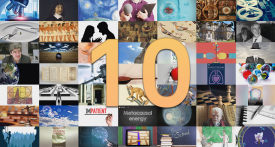
Yes, this fall, e-ostadelahi is celebrating its 10 years of existence! A good occasion to look back at what has been accomplished and where we are now.
10 years ago, the Web 2.0 wave was peaking: the “blogosphere” was emerging; so-called “social” media that have since transformed the way we use the internet were starting to develop; the first iPhone had only just come out… The site has naturally accompanied these evolutions. While its content was expanding, it also took on new forms. A mobile version was made available in 2015, followed by a dedicated app, the functionalities of which have not stopped evolving.
Lire la suite
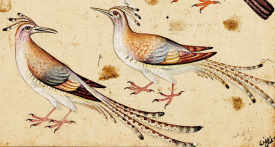
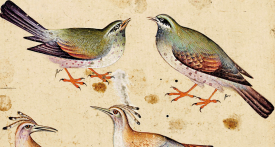
This article completes the series based on Attar’s Canticle of Birds (also known as the Conference of the Birds), following “The nightingale and the rose: from attachment to renunciation” and “Our intimate enemy: the imperious self”. We now turn to an aspect of the imperious self that stalks all spiritual seekers: pride and arrogance in spirituality. Attar evokes it in the form of an earthy anecdote…
Lire la suite
This third article of reflection on the “Quintessence of Religions” is the last in a series dedicated to Ostad Elahi’s poem. After the question of “God” and that of “evil”, Leili Anvar’s commentary now invites us to reflect on the notion of the “good”. To give a “quintessential idea” of what the good is, Ostad Elahi reformulates here the two phases of the Golden Rule that determine what the theologian and philosopher Olivier du Roy defines as the “ethics of the reciprocity and fundamental intersubjectivity of man”.
Lire la suite
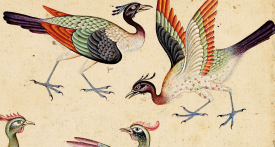
This article is part of an ongoing series on Attar’s Canticle of the Birds (also known as The Conference of the Birds), a spiritual text rich in lessons for spiritual practice. For more information about the book and its author, please refer to the first article in this series entitled “The nightingale and the rose: from attachment to renouncement”.
The focus of this article is on our most intimate enemy: the imperious self. Here is how it is portrayed by Attar…
Lire la suite
Many of us have participated in the reflection activity proposed at the end of the article “The nightingale and the rose: from attachment to renunciation” and have examined the question of how we can apply in our lives the hoopoe’s advice to the nightingale enamoured of the rose. What are then these roses—or attachments—that too often fill our thoughts or take up space in our lives to the point that we neglect that which is essential?
Lire la suite
For those engaged on a spiritual journey, delving into the works of great spiritual figures can be a way to connect to God and benefit from the spiritual lessons contained in these works. In this regard, Ostad Elahi points out that the miracles that may have been performed by great divine personalities in their times are useless to us today. Their works, on the other, hand “guide us on the right path and never become obsolete”. Among these works, he mentions in particular the Canticle of the Birds by the poet Attar, and the “thousands of useful points” it contains for us.
Lire la suite
After the success of the “One day, one Maxim – 28 days straight” lab, which was based on the volume entitled 100 Maxims of Guidance, OstadElahi inPractice is about to launch a new lab that will follow the same dynamic and intensive format. This time, each day of the 28-day period will be devoted to meditating upon and putting into practice one of the sayings selected from Words of Truth (draft of the forthcoming English translation of Ostad Elahi’s oral teachings originally presented in the Persian book Bargozideh).
Lire la suite
One year after its release, e-OstadElahi has revamped its mobile app to provide a more pleasant browsing experience and new features.
What’s new? A lighter and more refined design, with improved visuals, makes browsing and reading easier and more comfortable.
A more comprehensive menu makes it easier to access all the available posts. You already had the option to navigate through the site by selecting a tag or a category. You may now also access, directly from the menu, all our news articles, all the pools, as well as all the articles containing videos.
Lire la suite
OstadElahi inPractice just released some new features aimed at enriching its users’ experience, in particular with regard to the “One day, one Maxim – 28 days straight” lab. Shared exercises As promised when the lab was launched, a few of the numerous exercises shared by users over the past few months now appear below each maxim, providing a useful resource to all those looking for inspiration when defining their personal exercise.
Lire la suite
Shortly before he was executed Socrates confided to one of his disciples that there was nothing to fear in death for the friends of knowledge. Indeed, if it is true that the body is merely a tomb for the soul, a form of unconsciousness that is lifted at death, what is there to fear for those who have dedicated their lives to seeking truth and justice?
Lire la suite
Go top
« Older Entries - Newer Entries »
|

 News
News Podcast








Recent Comments