Show all entries of this category
“The cause of everything that happens to you is in you; you should therefore look within yourself to find the cause.”
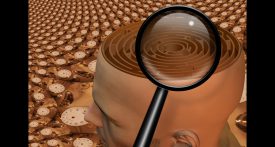
My reading of this maxim by Ostad Elahi triggered a number of thoughts that I would like to share by way of this article. A hearty thanks to e-ostadelahi.com for the opportunity to share with their readers.
We tend to spend a lot of time blaming “the world” for our misfortunes. On the other hand, we consider anything good to be the fruit of our own doing. But as always, giving it a little thought can make us realise that reality is a lot more complex.
Lire la suite
Hadj Nemat, Ostad Elahi’s father, passed away on 28 February 1920. The 93rd anniversary of his departure is the occasion to look back at the life and works of this great spiritual figure. The following article, originally published by the Encyclopædia Iranica provides a brief yet detailed and well documented overview of who Hadj Nemat was and what he accomplished. The Encyclopædia Iranica has kindly authorised us to reproduce this article, the original version of which is available here.
For those who wish to learn more about Hadj Nemat’s life and works, more resources, including historical and biographical information, as well as photographs and testimonials, are available on the website hadjnemat.com.
Lire la suite
Why be humble?
If humility consists in resisting the pressure of pride—whose power we can sense—it most certainly requires an effort. As all efforts, it needs to be justified, for after all, if the illusions of an oversized ego are part of my fundamental nature, and as long as they remain within the limits of reason, why try and rid myself of them—assuming this is even possible?
There are at least two reasons that would provide motivation for such an effort:
The first reason is ethical and refers to what has been called “love of truth”. While it is in my nature to be blind to the true place I hold in the world, it is also in my nature, once I have become conscious of an illusion, to try and free myself from it. No one can content themselves—unless they are spiritually dead—with living knowingly in error without trying to come clear. We are naturally inclined to seek truth, whatever it may be, even if it is unpleasant for our ego. Given that pride is founded on lies and illusions, it is our ethical duty to strive to become more humble so as to free ourselves from these lies and to come closer to the truth of what we really are.
Lire la suite
As with all omnipresent and invasive character traits, consubstantial pride is difficult to localise. But a number of characteristics make it possible to pinpoint it. These characteristics are more or less obvious depending on the individual, but no one is entirely devoid of them. Delving within is all it takes to uncover strong tendencies that express themselves more or less openly depending on the situations, and take different forms, at times obscure, at times subtle or twisted.
Lire la suite
We all know Pinocchio. This living wooden puppet whose nose grew bigger when he lied and who eventually turned into a real boy. The story of his adventures have arguably become part of our modern mythology. But with numerous versions and adaptations (including the famous 1940 Disney movie), many of us remain unfamiliar with the original story written by Carlo Collodi in the 19th century. Yet it is this original story that can be viewed as providing a brisk and original explanation of the meaning of life. It is therefore worth mentioning the brilliant new translation of the story by Geoffrey Brock published by the New York Review of Books in 2008 (a new edition for children illustrated by Fulvio Testa is scheduled to come out in October 2012).
In an article originally published on his blog (brendanmcphillips.com), Brendan McPhillips explains why, in his view, this puppet story constitutes a clear and accurate metaphor for the meaning of life itself. He has kindly authorised us to share his article here.
Lire la suite
Humility is the most accomplished form of self-knowledge. It presupposes that you have a clear and lucid perception of what you really are and of the place you hold in the world. It presupposes also that you look at yourself with neutrality and even distance: humility also means being able to look at yourself with humour.
As explained in my previous post, humility can be defined as the articulation point between two modes of the self (psychological and metaphysical): it means acknowledging my metaphysical condition (the “I am nothing”) even when I am in the midst of social interactions, surrounded by others, just like others. It means being aware of my insignificance even when I go about my business, defending my rights and making sure I command respect if necessary, while constantly carrying within me that “double thought” Pascal alludes to.
Lire la suite
Humility used to be a cardinal virtue. It is, however, not so appealing to our minds anymore. It may be that we subconsciously associate it with humiliation, because both words are derived from the same root: humus (earth, ground). To be humble would then mean to belittle oneself, to stay on the ground, to submit: that is hardly a prospect one would consider desirable.
Why then should we contemplate this concept today? What use can it be to our practice of ethics? Well, it can transform the relationship we have with ourselves and with others in an extremely beneficial way.
Lire la suite
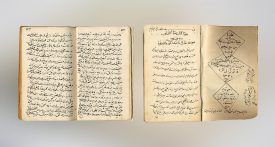
Ostad Elahi often emphasised the crucial role played by his father Hadj Nemat (1871-1920) in his spiritual formation. Hadj Nemat was 29 years old when a life-changing spiritual experience led him to relinquish his administrative functions by the governor of his region in order to dedicate himself entirely to mysticism and spirituality. Revered as a saint during his lifetime, he was also famous for his poetry. Among his many writings is the Book of the Kings of Truth. Ahead of the 92nd anniversary of his death, the following anecdotes presented on hadjnemat.com will shed some light on his extraordinary spiritual personality.
Lire la suite
If our approach to spirituality is to be rational, where should we stand on the issue of worlds and the interworld? Must we blindly “believe” what we are told and view such concepts as mere revelation, or should we consider the possibility of their existence in a rational way?
One way of attempting a “rational” apprehension of worlds and the Interworld is to reflect on the notion of “absolute divine justice”. Let’s lay out the following alternative: either there is such a thing as divine justice (God is just), or it is mere fancy.
Lire la suite
The following poem is extracted from the Book of the Kings of Truth, written in 1919 by Ostad Elahi’s father, Hadj Nemat. Composed from more than 15000 verses, this book recounts the life of the saints, prophets, and great spiritual figures of humanity. Narrative sequences alternate with more meditative passages in the form of prayers, […]
Lire la suite
Go top
« Older Entries - Newer Entries »
|

 News
News Podcast








Recent Comments