Search results for tag "Self-knowledge" - 10 answer(s)
There is no Nobel Prize (to date) rewarding ethics research, but surely no one would dispute that in this field Ostad Elahi was perfectly learned. What is meant here by the word “learned”? Being learned is not merely knowing. A learned individual is first and foremost one who comprehends, not in theory only or through sustained reading, but as a result of self-acquired concrete knowledge. To comprehend a reality is to have concretely experienced it, to have gained first-hand knowledge of some truth. Indeed, when Ostad Elahi addresses any topic, you have a distinct sensation that he is speaking from personal experience.
Lire la suite
The imperious self is an anti-self, i.e., a contrary force that is rebellious and systematically out to pull us away from where our real self—our soul—wants to lead us. If you want to meet with your imperious self, there is nothing simpler, all you need is to take a step towards some ethical or divine principle: help someone without expecting anything in return, hold our tongue when your impulse is to backbite or show off, try to rid your mind of negative thoughts, etc. The reaction will be immediate, and you will clearly witness the power of your imperious self in countering your attempts at such accomplishments.
Lire la suite
As we have seen, the imperious self functions on the basis of the “terrestrial” values (ego and material interests). Its action on us could be summarized as follows: to focus our thoughts and aspirations solely toward terrestrial values and to make us forget celestial values; to put it in another way: to make us act solely according to our own material and selfish interests with no regard for others’ interests or for our spiritual dimension.
Lire la suite
If the plural “portraits” is used here, it is to best illustrate the multifaceted and elusive figure of our inner life for the imperious self is a shape-shifting model that makes for a difficult subject for a painter. We never really know where to find it when we look for it, and we often find it where we have not been looking for it—at times in our outward behaviour, more often in our thoughts and emotions, in our most daily activities as well as in our actions that appear most spiritual and most noble. The imperious self is like a creeping rootstalk that runs underground and spreads itself out in the Self.
Lire la suite
This is the first piece in an extended series dedicated to the practice of ethics and more specifically to the identification of the main source of our anti-ethical tendencies: the imperious self. This concept is given a precise definition in The Path of Perfection: “The imperious self is a powerful psychological energy that is harmful for the soul. This energy is continuously produced by the activity of our character weak points, resulting in anti-ethical and anti-divine impulses and desires at the level of our conscious self”.
The paradox is that the fierce resistance deployed by our imperious self against our ethical endeavours actually constitutes the necessary condition for the process of spiritual perfection to take place. In this sense it could very well be considered as our “best enemy”.
Lire la suite
From a perspective of ethical perfection, to see ourselves in the mirrors of others is to take everything that emanates from them (actions, words, behaviour, etc.) as means to better know ourselves. Such was the general conclusion reached by Sandrine Duplessis in the first part of her inquiry. In this second part, the author gives us a few pointers as to how to concretely put this into practice.
Lire la suite
“Know thyself”. This is certainly a beautiful maxim, but how can we expect to achieve such an end when part of ourselves is resisting so vigorously and preventing us from seeing our own faults? It is a fact: we tend to systematically overvalue ourselves and we are much more sensitive to the ethical wrongdoings of others than to our own. This two-part article by Sandrine Duplessis suggests that the solution may well lie in the problem: it is by changing our behaviour toward others that we may come to achieve a more lucid knowledge of ourselves.
Lire la suite
A number of annoying things have happened to me recently. There was that young man who shoved me as he was getting on the subway; that colleague who asked me to finish some of his work and then left the office for the day; and then those other colleagues who kept interrupting me while I was in the middle of an important task to ask me the same question over and over again—a question to which I did not have the answer… Those incidents occurred over a two-day period. They put me in a state of irritation and bad mood I had never experienced before.
Lire la suite
Now that we have identified the forces at work behind impatience and why we should take it seriously, it is time to ask ourselves how to fight against this character flaw and its most directly harmful manifestations. Francoise Klein looks into the concrete forms of this practice. After semiology comes therapy…
Lire la suite
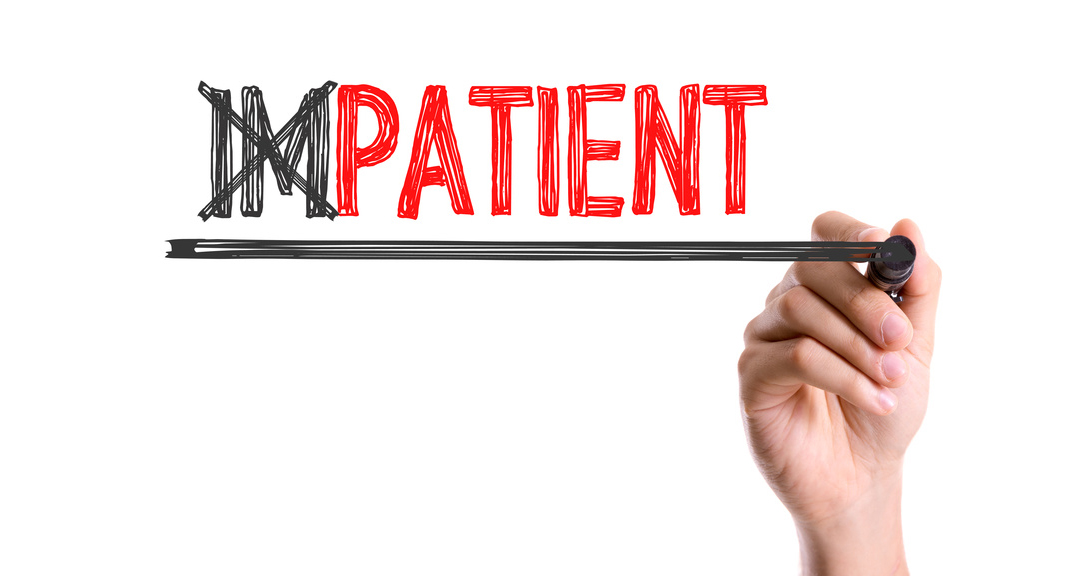
Gluttony is little more than indulging in guilty pleasures and curiosity (only) killed the cat. What about impatience? It is another one of those traits we reluctantly call a character flaw, especially when we are the ones who have it. When it is not simply valued as a mark of high standards and perfectionism, it is at worst looked upon with leniency. Yet at the same time patience is a praised virtue. And we have all witnessed the effect impatience has on others, the pressure put by impatient people on those around them and the tension that ensues, none of which is ever pleasant.
Lire la suite
« Prev - Next »
|

 News
News Podcast










Recent Comments